

Biochar for Compost: Boost Soil Health
Biochar can be incorporated into compost as part of a broader soil health strategy designed for regional growing conditions. KCBIOCHAR produces biochar from 100% recyclable wood feedstock and supplies raw biochar, charged biochar, 100% biochar fines and coarse grades, and a 20% Biochar Compost Blend to farmers, landscapers, gardeners, and land managers in the Kansas City area. Because the material is produced locally, area customers can source amendments without relying on distant supply chains. The KCBIOCHAR team can also help growers compare product types for their agricultural, landscaping, or soil management application.
Key Takeaways
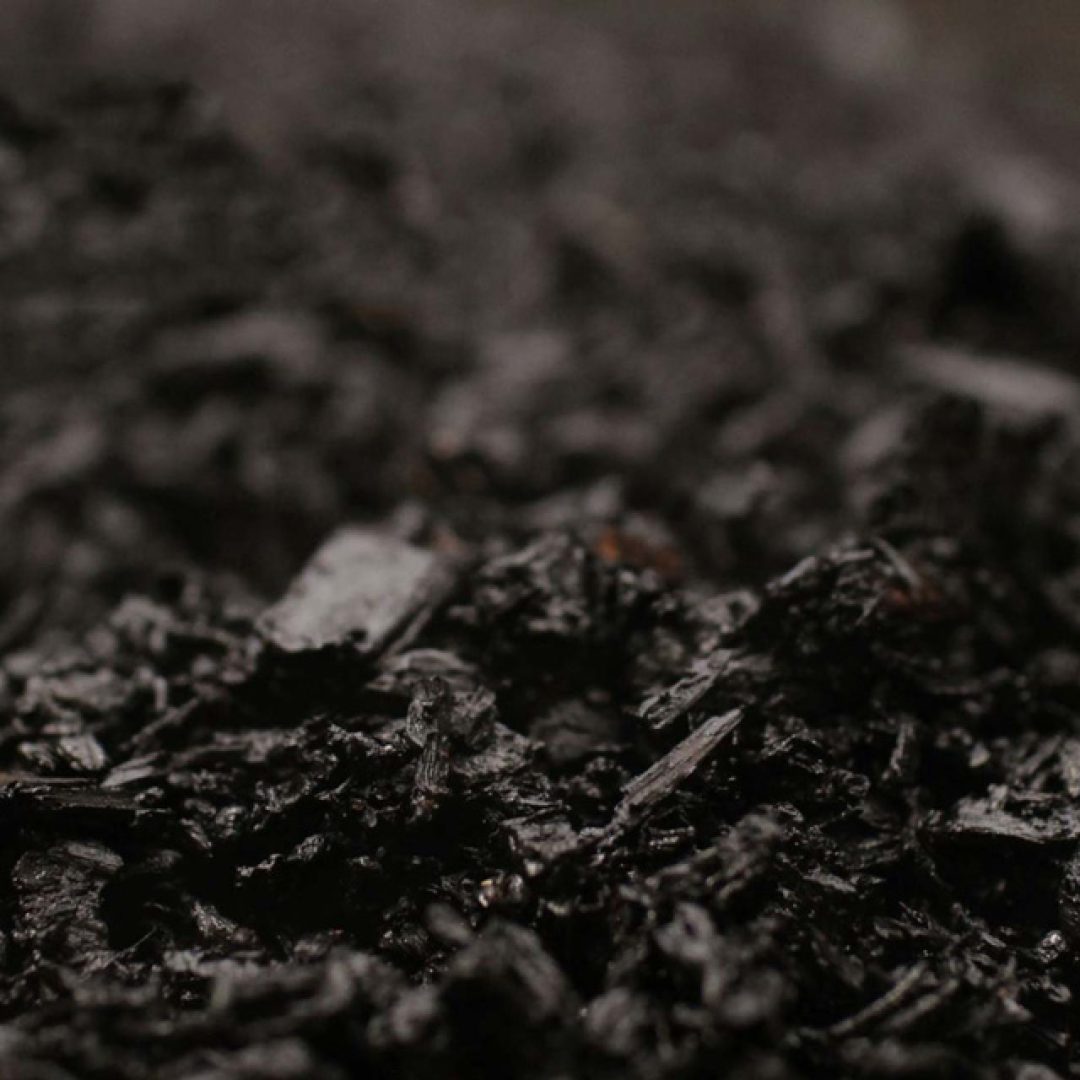
Stable Carbon Foundation
Biochar is a durable, carbon-rich material produced through the controlled pyrolysis of clean woody biomass.
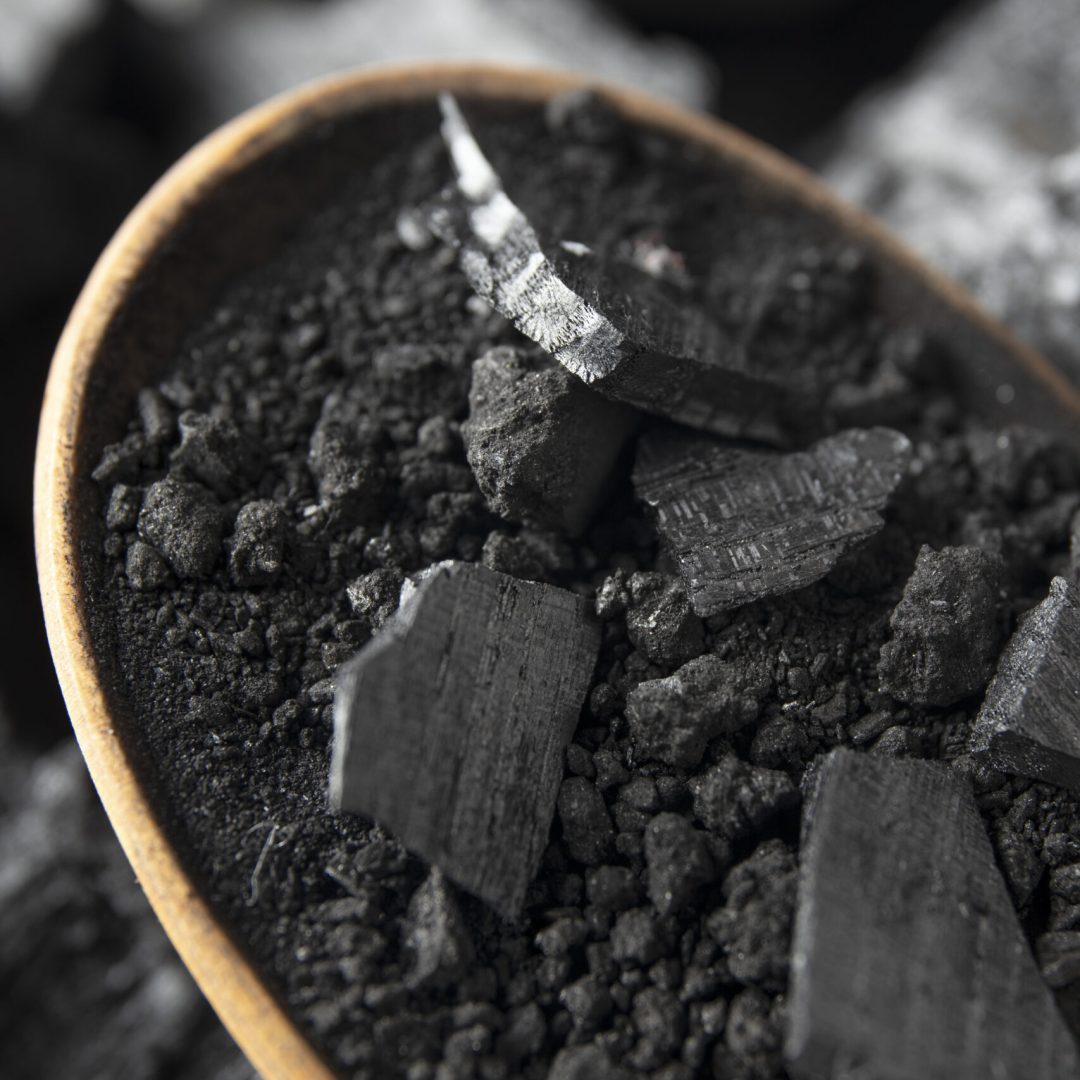
Versatile
Product Line
KCBIOCHAR supplies raw biochar, charged biochar, 100% biochar fines, and a 20% Biochar Compost Blend for agricultural, landscaping, and soil management needs.
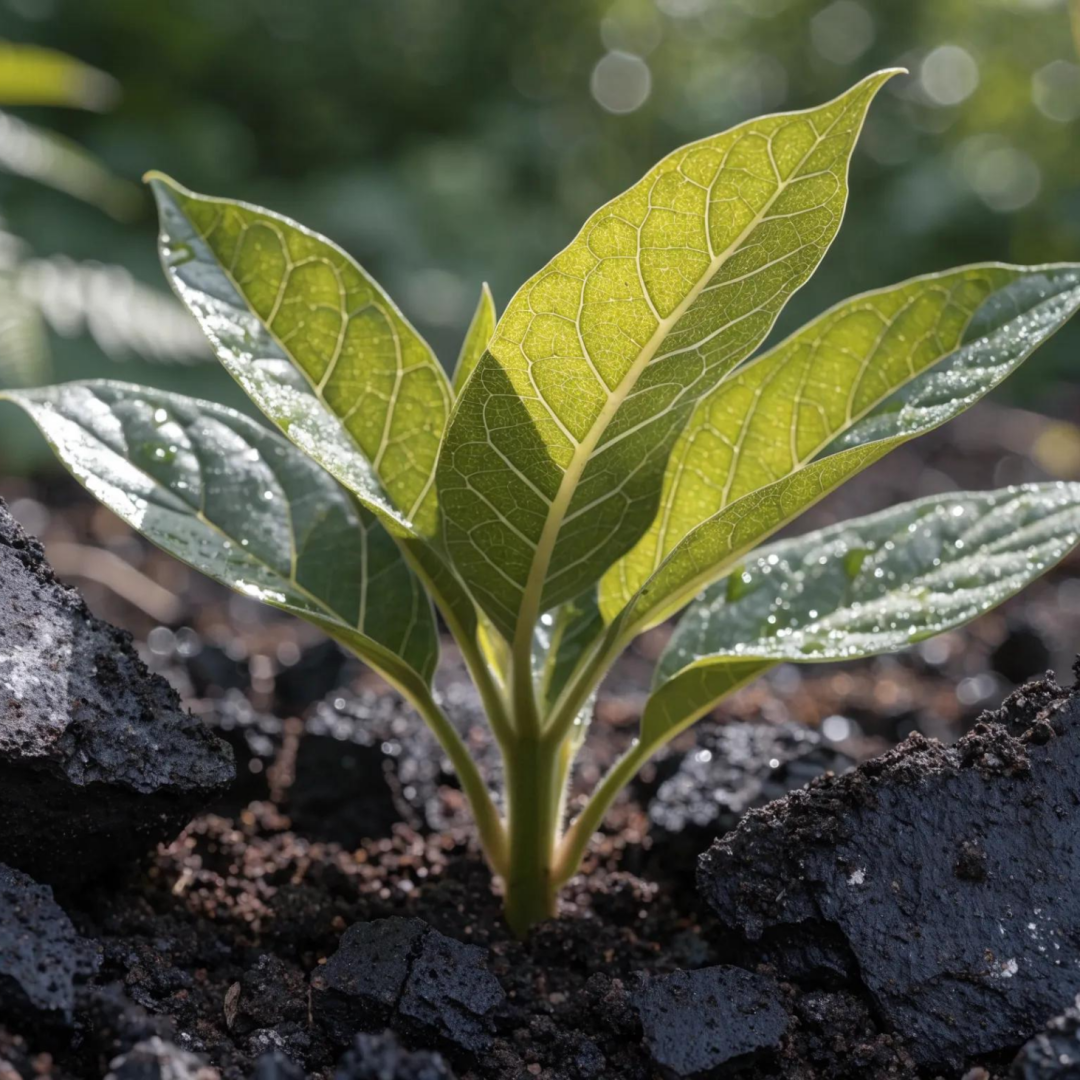
Physical Soil
Support
The porous internal structure of biochar is designed to help improve soil moisture retention, assist with nutrient holding capacity, and provide physical habitat for beneficial soil microbes.
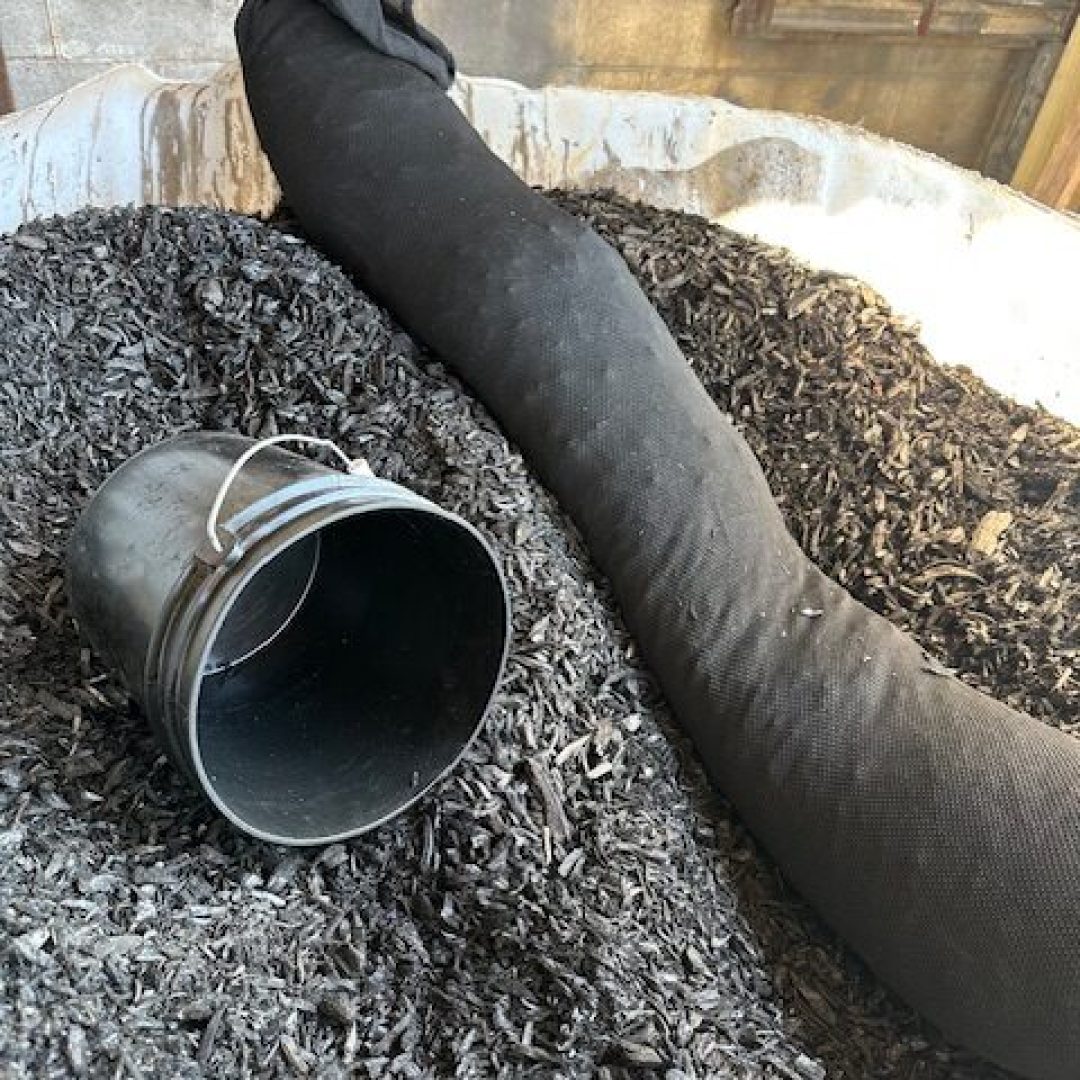
Integrated Management
Biochar functions effectively when incorporated into broader soil health programs, pairing well with compost and organic amendments to support native soil conditions over time.
What Is Biochar for Compost?
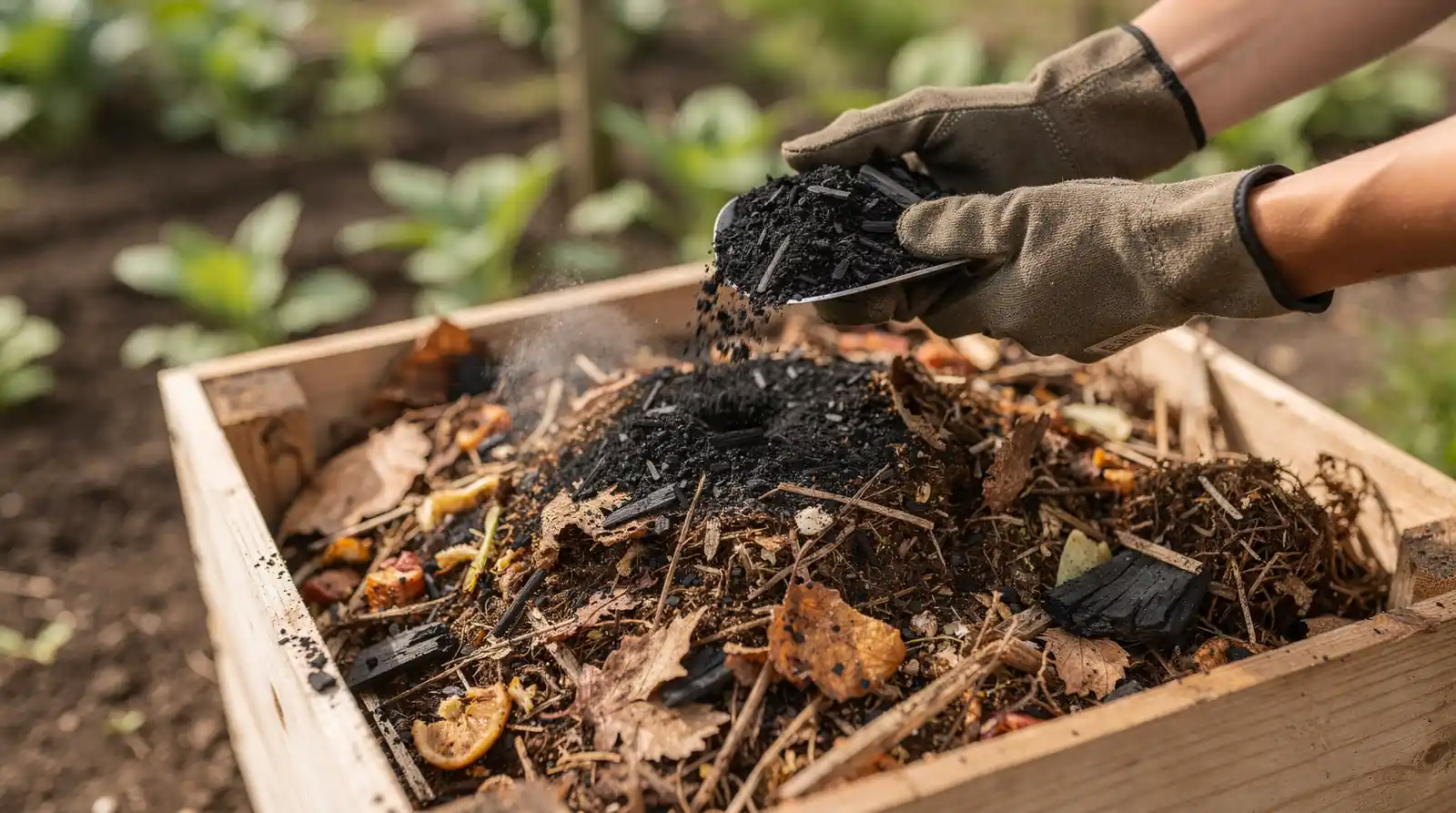
Biochar for compost refers to high-carbon amendments integrated into compost mixtures or deployed as part of compost-based soil management programs. Biochar is a stable, carbon-dense material produced through pyrolysis a thermal decomposition process that heats organic matter in an oxygen-deprived environment. This conversion leaves behind an enduring, porous carbon matrix that resists rapid biological breakdown.
KCBIOCHAR manufactures its materials using 100% recyclable wood feedstock heated at high temperatures in an oxygen-starved chamber. The resulting biochar has a porous microscopic structure designed to house beneficial soil microorganisms, improve moisture retention, and help hold key nutrients in the root zone.
To accommodate different application scales, KCBIOCHAR offers raw and charged biochar, 100% biochar fines and coarse grades, and a pre-mixed 20% Biochar Compost Blend. Products are available in super sacks or as bulk pickup. For larger agricultural or land restoration orders, contact us to discuss quantities and delivery options.

Is biochar the same thing as compost?
No. Compost and biochar perform distinct, complementary roles in soil health:
Compost consists of biological matter actively broken down by microbial activity. It delivers immediate organic matter, beneficial biology, and a readily available release of nutrients, but it naturally continues to decompose and deplete over one to two growing seasons.
Biochar is a high-carbon amendment created through the thermal process of pyrolysis. Rather than breaking down, its recalcitrant carbon matrix is designed to resist biological decay and remain stable in the soil profile over the long term.
Because biochar does not decompose like compost, it serves as a lasting structural framework in the soil. When paired together, compost delivers the short-term biological charge and soluble nutrition, while biochar provides the durable pore network that helps retain moisture, house microbes, and keep those added nutrients from leaching away.
How Does Biochar Improve the Composting Process?
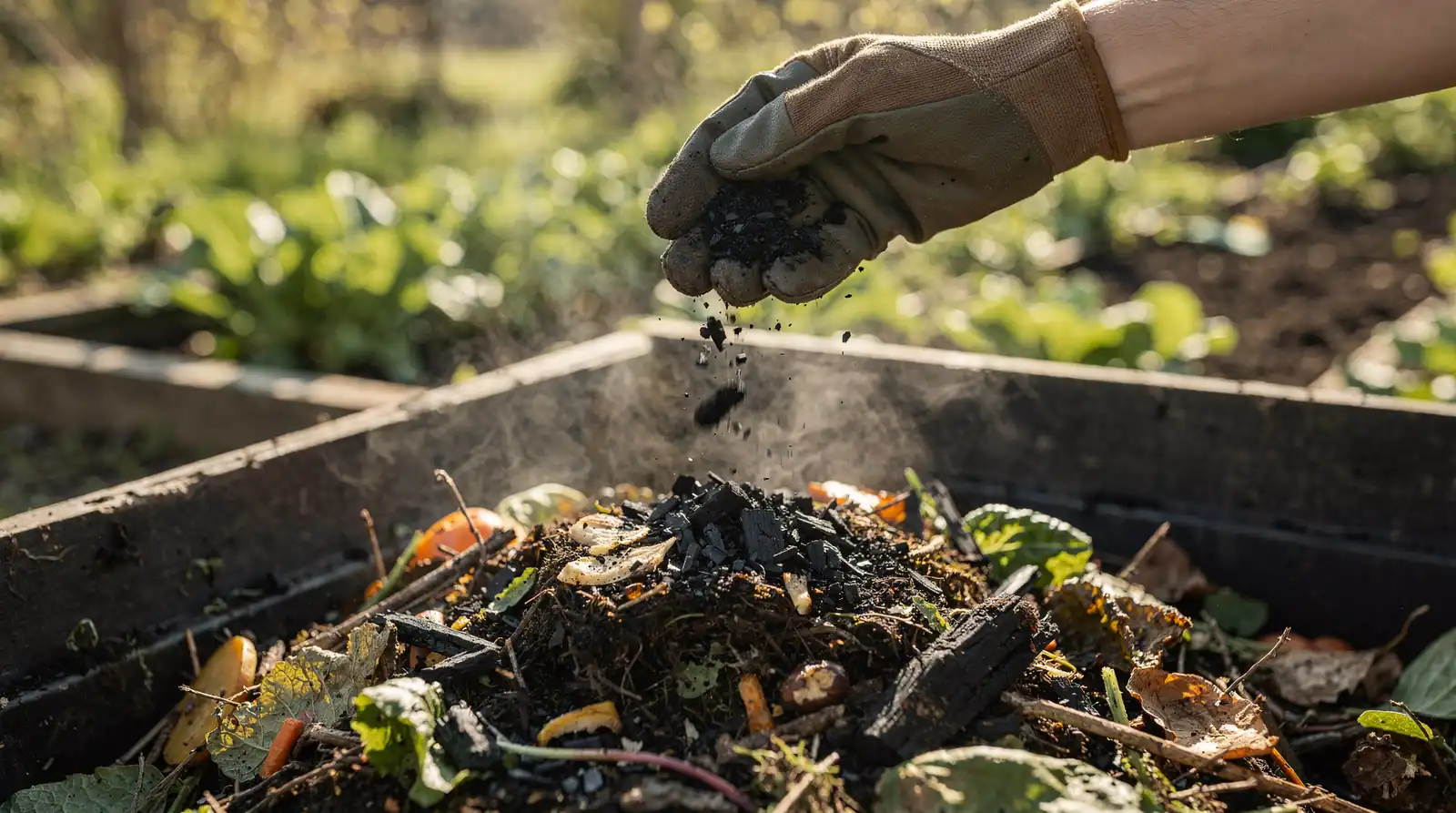
Biochar can be introduced alongside compost or integrated into compost blends as part of a balanced soil amendment strategy. Its primary benefit during application comes from its stable, highly porous carbon structure, which is designed to provide physical habitat for beneficial microorganisms while helping support moisture and nutrient retention once worked into the soil profile. To make this pairing straightforward for growers, KCBIOCHAR provides pre-mixed, compost-blended biochar alongside its raw and charged product options.
The underlying mechanism begins with the thermal production process itself. Pyrolysis heats organic biomass in an oxygen-deprived kiln, driving off volatile compounds without letting the material combust into ash. KCBIOCHAR manufactures its materials using clean, recyclable wood feedstock, creating a durable carbon framework that resists rapid biological breakdown.
This process yields an enduring porous network that functions effectively in compost and soil systems. The microscopic voids within the carbon lattice offer protected colonization zones for native soil biology, help buffer moisture levels during dry periods, and assist in holding onto soluble nutrients so they remain accessible in the root zone rather than washing through the profile.
What happens to biochar after it's mixed into compost?
Unlike traditional organic matter that breaks down and depletes over a season or two, biochar remains an enduring carbon structure within the soil profile. KCBIOCHAR describes its materials as stable soil amendments engineered to persist for years without rapid biological decomposition.
When combined with compost or incorporated into the ground, biochar functions as a permanent physical framework. The microscopic pore network it introduces helps:
Shield Beneficial Microorganisms
The internal pores serve as a protected shelter for native soil biology and mycorrhizal fungi against temperature extremes and moisture stress.
Support Long-Term Hydration
It acts as a subterranean reservoir, capturing moisture during rain events and helping sustain steady water availability in the root zone.
Retain Added
Fertility
It provides ongoing cation exchange capacity, helping bind soluble nutrients from compost and fertilizers so they remain plant-available rather than leaching past root depth.
How Should Growers Apply Biochar in Compost?
Growers can apply the 20% Biochar Compost Blend directly to field beds, or blend 100% biochar fines or coarse grades into an ongoing composting and soil amendment program. To match different project sizes, KCBIOCHAR offers super sack and bulk pickup options, with truckload and partial-load orders available by quote.
Because performance depends on baseline soil structure, target crops, and specific field goals, application techniques should be tailored to the site:
Incorporate Uniformly
When blending biochar into active compost or directly into the soil profile, till or rake the material evenly into the top few inches of the root zone. This ensures the porous carbon matrix distributes evenly alongside organic matter rather than resting on the surface.
Pre-Load Raw Material
If working with raw biochar, combining it with finished compost or organic fertilizers prior to or during application allows the carbon lattice to absorb active biology and nutrients before entering the soil.
Verify Project Scope
Application rates and blending ratios vary depending on whether the project involves broad-acre agricultural ground, commercial turf, garden beds, or slope stabilization. Growers should evaluate site-specific needs and confirm incorporation requirements before placing an order.
Does biochar lose effectiveness once it's mixed into a compost pile?
No. Rather than losing its properties, biochar maintains its stability throughout the composting process and is actively enhanced by it. Because biochar is produced through high-temperature pyrolysis, its recalcitrant carbon structure resists the rapid biological breakdown that decomposes ordinary organic matter.
Mixing biochar into a compost pile actually supports its primary soil functions:
Porous Matrix Remains Intact
The microscopic pore network does not degrade during the heating and active biological stages of composting; it continues to serve as an enduring physical framework.
Natural Inoculation ("Charging")
Introducing biochar into a pile allows its vacant pores to absorb dissolved nutrients, moisture, and active microbial colonies. This pre-loads the carbon matrix before soil application, preventing raw biochar from temporarily drawing native nitrogen away from surrounding plants.
Long-Term
Persistence
When the finished compost-biochar blend is ultimately worked into the ground, the compost provides immediate biological fertility, while the stable biochar stays in place to assist with moisture retention and soil aeration season after season.
What does blending biochar with compost do for soil moisture and nutrients?
Blending biochar with compost combines immediate biological fertility with an enduring physical carbon structure, addressing both moisture behavior and nutrient dynamics in the root zone:
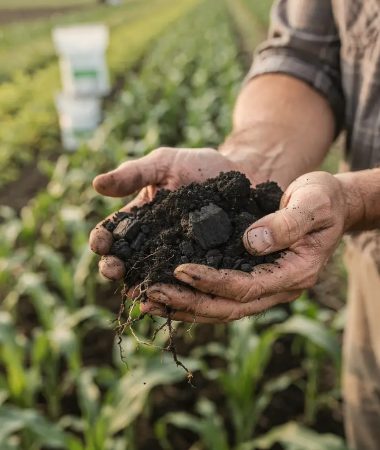
Moisture Management and Infiltration: Biochar’s internal pore structure is designed to act like a microscopic sponge. When worked into native ground alongside organic compost, it helps improve overall soil aeration, encourages downward water infiltration during heavy rain events, and supports moisture retention during extended dry periods.
Nutrient Retention and Cycling: Compost contributes organic matter and a ready supply of plant nutrients, while biochar provides stable surfaces and microscopic cavities that help hold onto those soluble compounds. This pairing helps keep nutrients available in the active root zone rather than allowing them to wash through the profile.
Balanced Amendment Approach: By combining the immediate nutrient release of compost with the enduring physical framework of pyrolyzed biochar, growers can establish a balanced soil amendment program. Actual performance will vary depending on baseline soil texture, crop requirements, moisture levels, and application rates, so growers should evaluate local site conditions when determining their overall amendment strategy.
FAQ
KCBIOCHAR offers a 20% Biochar Compost Blend for customers who want biochar and compost pre-mixed, plus 100% biochar fines and coarse grades that can be blended into an existing compost program. For erosion control applications, a 50% Biochar/Compost Filter Sock is also available. Contact us to confirm availability and pricing before ordering.
KCBIOCHAR produces its biochar from 100% recyclable wood feedstock through pyrolysis. Compost, by contrast, is made from organic materials such as yard trimmings, food scraps, or manure that break down through microbial activity. If you plan to blend biochar into your own compost, contact us to discuss which biochar grade fits your mix.
Conclusion
In closing, biochar can be incorporated into compost and existing soil management programs as part of a comprehensive approach to long-term soil health. KCBIOCHAR produces raw, charged, and compost-blended bulk biochar from clean, recyclable wood feedstock through controlled pyrolysis in Kansas City. The resulting stable, porous carbon structure is designed to support moisture retention, assist with nutrient holding capacity, improve aeration, and provide physical habitat for beneficial soil microbes.
Regional growers, landscapers, and land managers can choose from super sack and bulk pickup options, with larger orders available by quote. Contact KCBIOCHAR to discuss product specifications, review application considerations, and plan your order.
KCBIOCHAR
3824 Fremont Ave., Kansas City, MO 64129
Monday-Friday: 8:00 AM-3:00 PM
Saturday-Sunday: Closed
816-506-4131